The Amount Of ADA Compliant Portable Restrooms Are Required in a Rental Cluster?
@cashgrdk024
October 14, 2026 · 13 min read
If you are renting out mobile bathrooms for an occasion, event, public event, or short-lived site setup, the short answer is this: when you have a collection of portable single-user toilet systems, at the very least 5 percent of the devices in that collection must be accessible.
That is the number most people are looking for when they ask about an ada mobile restroom or an ada compliant mobile commode. However in practice, the matter is just part of the work. The accessible system has to be a genuine, functional accommodation, not simply a larger box went down somewhere on the side of the lot.
That difference matters. I have actually seen planners focus on purchasing the best quantity of ada certified mobile restrooms, after that forget whether somebody can really get to the system, get through the entry, turn inside, and utilize the component with the required clearances. Compliance is not just a math issue. It is a positioning and use problem too.
The number that manages the cluster
For portable single-user commode systems organized in a collection, the controling accessibility regulation is that at the very least 5 percent of the devices in each cluster need to come. The Access Board has made clear that this uses even at short-term events.
That suggests the requirement is linked to the collection itself, not just the website all at once in some unclear feeling. If you have one bank of units near the main entryway and another bank near food solution or a remote task area, the concern is not only the amount of overall systems you rented out for the day. The inquiry is the number of are in each collection and whether each collection includes the required easily accessible share.
This is where individuals occasionally get tripped up. They presume one ada available portable toilet somewhere on the residential property looks after whatever. The access standards are much more certain than that. The 5 percent policy relates to clusters of portable single-user systems, and the easily accessible devices need to be part of that setup.
If you are making use of the expression ada-compliant portable bathrooms in a rental discussion, this is typically the initial indicate pin down with your supplier. Ask how many systems are in each cluster, how many accessible units are being supplied within every one, and where they will certainly be placed.
Why the matter alone is not enough
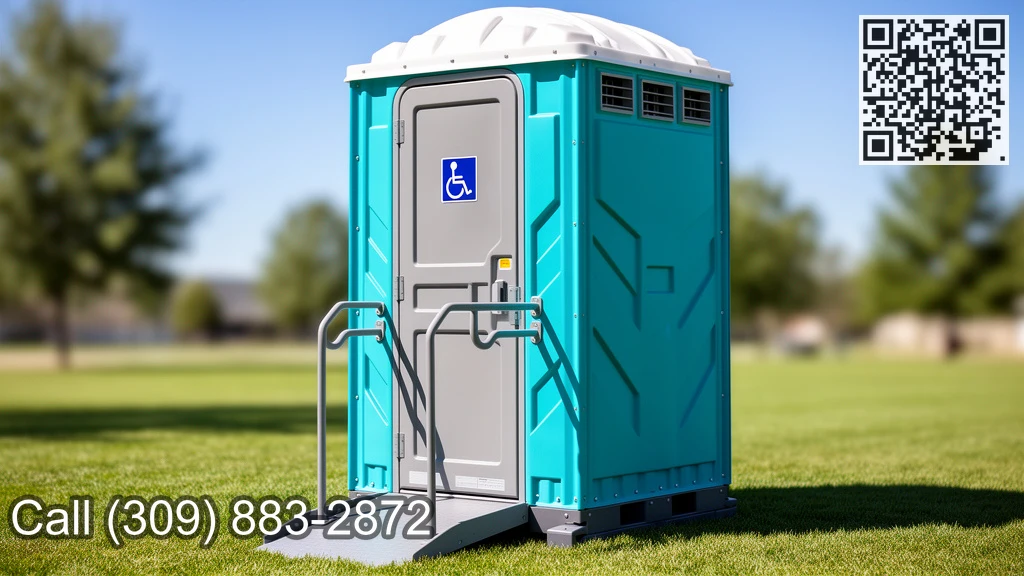
A compliant count can still create an inadequate result if the available device is successfully unusable. The federal criteria call for more than a bigger stall or a bigger door. An ada compliant available mobile washroom must be situated on an accessible path, and the entrance needs to be accessible too. If ramps or touchdowns are needed, those elements need to abide by the technical requirements.
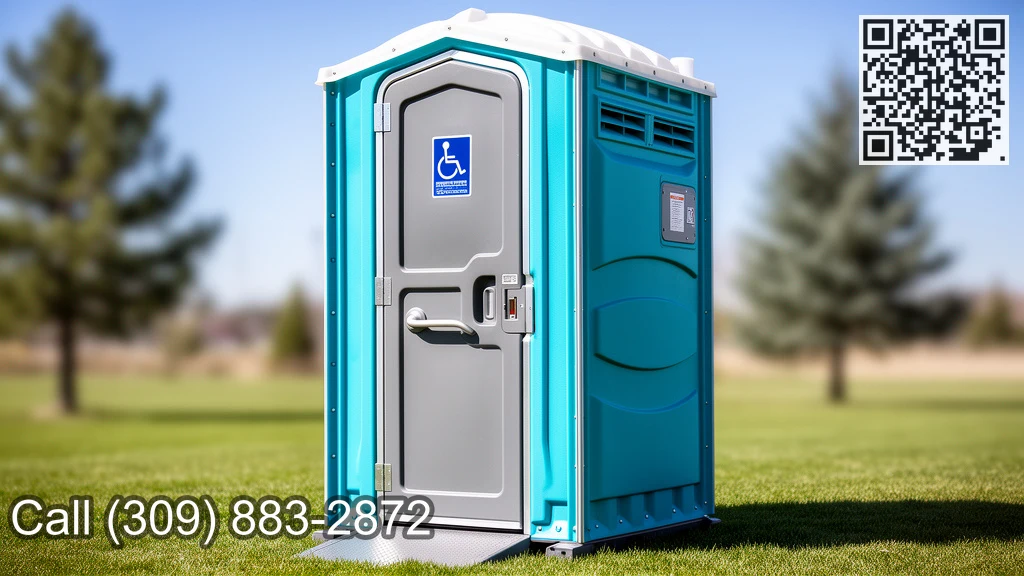
Inside the unit, the bathroom space need to satisfy the relevant technical demands for component clearances, transforming area, door maneuvering clearances, and the appropriate grab bar and water closet clearance policies. The device likewise has to be identified with the International Sign of Accessibility.
That is why I often tend to inform clients that buying an ada portable toilet is the start of conformity, not the end of it. The rented out system has to operate as component of an available experience from the approach right via use the restroom.
A typical preparation blunder is to place the accessible system on soft ground, loose crushed rock, or a path broken by slopes, curbs, cables, hoses, fence, or short-term storage. An additional is to put the available system off sideways because it is larger and more difficult to fit into the row. Even if the rental company supplies the appropriate ada handicap easily accessible mobile restroom, the website setup can still weaken accessibility.
What "5 percent" resembles in real life
The requirements give the percent demand, and that is the managing guideline. In everyday planning, individuals usually desire a quick means to think of it. If the cluster is small, you still need to see to it the available need is fulfilled within that group of devices. If the cluster gets bigger, the number of needed available systems climbs with it.
What issues most is that you do not deal with the percentage delicately. A cluster of mobile commodes is not exempt just because it is temporary, and a celebration is not exempt just because everybody is moving fast. Short-lived events are especially part of the discussion here.
I would certainly be careful concerning comprising your very own rounding approach unless your lawful advise or authority having territory has given instructions. The validated federal rule below is the 5 percent minimum in each cluster. If your matter lands in a gray location and you are uncertain how to apply it, the useful and gentle response is simple: do not cut it close. Order sufficient ada certified portable toilets to plainly satisfy the demand and ensure they are properly placed.
That strategy often tends to prevent two headaches at once. First, it decreases the danger of underproviding available systems. Second, it generally improves the guest experience for individuals that require more room, less complicated access, and useful clearances.
Temporary does not mean exempt
This factor deserves ordinary language due to the fact that it still shocks people. The easily accessible system demand uses even at short-term events. That indicates performances, fairs, short-term community occasions, and similar rental circumstances are not outside the reach of ease of access guidelines even if the arrangement just lasts a day or a weekend.
The useful effect is that a portable toilet rental strategy requires the exact same self-control you would bring to a more irreversible center. If you are mapping tents, stages, fencing, food areas, and vehicle parking, the ada portable bathroom rental element should be part of that website conversation early, not something handled the afternoon before delivery.
I have viewed event teams spend hours talking about generator positioning and group circulation, after that treat toilet access like a last-minute upgrade. It is much easier to get this right when the available path and unit positioning are planned before vehicles arrive.
The construction-site exemption individuals misunderstand
There is an important exception in the older 1991 conventional language that frequently gets repeated without context. Mobile toilet units at building sites used specifically by building workers were treated differently under that earlier scoping provision.
What issues for a lot of readers is this: that exemption does not eliminate the accessible-unit need for general mobile bathroom leasings. If you are preparing mobile bathrooms for the general public or for a mixed-use setup, you must not presume that a construction-related carveout applies to you.
This is one of those areas where partial understanding causes troubles. Somebody listens to that building and construction portable commodes are discriminated and afterwards thinks all short-term systems are outside the ease of access rules. That is not a risk-free presumption. For basic rental clusters, the accessible-unit need remains.
The difference between a bigger unit and an accessible one
Not every larger mobile washroom is automatically an ada certified mobile commode. Size helps, however dimension alone is not the standard.
For a portable system to serve as the needed available choice, it must fulfill the relevant technical demands for commode areas. That includes transforming room, door maneuvering clearances, component clearances, and the relevant grab bar and water wardrobe clearance regulations. It additionally https://pristineportablesil.com/service-area-bettendorf/ requires available technique and entry. On top of that, it has to be related to the International Icon of Accessibility.
This is where exact language issues when you speak to a rental company. If you just request for a "big system," you might not get an ada compliant portable bathroom. If you ask particularly for an ada accessible portable restroom and confirm that it is planned to satisfy ADA accessibility requirements, the conversation obtains much clearer.
I additionally recommend avoiding shorthand that leaves way too much area for analysis. Terms like "mobility device unit" or "handicap system" sometimes obtain used loosely in the field. If you need compliance, say so directly. Ask for ada compliant accessible mobile restrooms, and then verify exactly how they will be installed and recognized on site.
Placement can make or damage compliance
An obtainable mobile toilet ought to not feel like an unique detour. It needs to be incorporated right into the cluster in a way that somebody can in fact make use of without unneeded barriers.
That implies considering the path first. If the available unit is separated by mud, ruts, visuals, high temporary shifts, or obstructed passages, the easily accessible label does refrain from doing much excellent. The route and entryway require to be available, and any ramps or landings that are required should follow the technological requirements.
Then consider the door and the instant area around it. Door navigating clearances are part of the technical requirements for the bathroom area. In practical terms, crowding the unit with barriers, trash bin, water barrels, or piled supplies is a bad routine. I have actually seen setups where the device itself was most likely acceptable, yet the room before the door had been swallowed by event equipment by opening up time.
Inside the system, transforming space and fixture clearances are not optional information. They are the reason an obtainable system is various from a basic one. Anybody who has tried to browse a cramped temporary washroom recognizes that a couple of inches in the incorrect place can turn a nominally obtainable unit into a discouraging one.
A useful method to assess a rental collection before opening
The simplest time to fix an accessibility trouble is before guests or attendees show up. As soon as lines type and the site is energetic, relocating systems or rebuilding gain access to is much harder.
Here is the evaluation I like to see prior to sign-off:
- Confirm that each cluster of mobile single-user systems consists of a minimum of 5 percent accessible units.
- Check that every needed ada mobile bathroom is marked with the International Symbol of Accessibility.
- Walk the route to each easily accessible unit and make sure the entrance is actually accessible.
- Verify that any ramps or landings offered as part of the configuration follow ADA technical requirements.
- Make sure the unit is not obstructed which the needed interior usability has actually not been compromised by configuration shortcuts.
That may sound fundamental, however most pricey mistakes in this field are standard blunders. Somebody ordered the appropriate unit and placed it in the wrong area. Someone booked an ada mobile bathroom, but a shipment group changed the layout to make room for a fence line. Someone assumed the rental business dealt with all ADA details, while the occasion group assumed the very same in reverse.
What clients normally ask after they listen to the 5 percent rule
Once people recognize that at the very least 5 percent of each cluster should come, the following concerns are generally functional. Is one system enough? Do we need more than the minimum? What if the website is spread out out?
The government requirement in the confirmed context offers the minimal percentage for every collection. Beyond that, judgment matters. If your site has several different restroom financial institutions, think in regards to real travel patterns, not just math. A solitary ada mobile toilet in one far-off edge might practically satisfy one collection but still serve people badly if the occasion footprint is large and movement between locations is difficult.
There is also a human fact that does not always turn up in formulas. Available systems are typically used by people that need more area for wheelchair devices, help, or handling, however they may likewise be sought by other guests merely because the device really feels roomier. That is one factor planners sometimes determine to exceed the bare minimum, specifically at active public occasions. I can not tell you an universal number beyond the verified government minimum, but I can state that developing to the minimum only functions well when the remainder of the arrangement is thoughtful.
If you anticipate rush hour, separated task areas, or long dwell times, a thin conformity strategy can create actual stress for customers who depend on the available units.
Accessibility belongs to a broader conformity culture
There is a larger backdrop worth observing. ADA conformity is not obtaining less important or much less visible. Enforcement and assistance task throughout markets continues, and accessibility expectations are significantly part of exactly how companies are judged, both legally and publicly.
That does not change the technical policy for mobile toilet clusters, which remains the 5 percent available minimum in each cluster, in addition to the route, entrance, identification, and toilet-room needs already discussed. What it transforms is the wisdom of treating these commitments delicately. The days when a venue can presume nobody would certainly look closely are fading.
For occasion organizers and website managers, that means the available bathroom strategy must be documented, inspected, and coordinated with the rental service provider instead of taken care of informally.
The concerns worth asking your rental company
A shocking quantity of trouble can be prevented by asking much better questions before delivery. Not every carrier uses the exact same terms, and not every sales discussion naturally gets involved in technical information unless you push for them.
The most beneficial concerns are uncomplicated. Ask whether the unit being recommended is an ada certified portable commode intended to satisfy availability demands. Ask the amount of available systems are being assigned per cluster. Ask how the devices will certainly be recognized. Ask what the service provider gets out of the website in order to preserve an available path and entry. If ramps or touchdowns are part of the setup, ask that is in charge of guaranteeing those components comply.
You do not require to turn the phone call into a lawful workshop. You simply require clarity. A lot of clients presume "obtainable" is self-explanatory, however on a crowded task, presumptions are where errors live.
The best mindset
The most safe attitude is to think about the easily accessible portable toilet as component of the core toilet package, not as an add-on for optics. Once you do that, the preparation improves. The unit gets positioned where individuals can reach it. The course gets inspected before opening up. The symbol is visible. The cluster matter makes good sense. The arrangement offers actual users rather than pleasing a vague checklist.
So, how many ada certified mobile restrooms are called for in a rental cluster?
At least 5 percent of the portable single-user devices in each cluster must come. Those devices need to be understood the International Symbol of Access, and they should be set up in a manner that supplies an easily accessible path, an obtainable entry, and compliance with the applicable toilet-room technological requirements, including transforming area, door steering clearances, component clearances, and the appropriate grab bar and water closet clearance rules.
That is the legal center of the answer. The practical center is equally as important: if a person can not reach it, enter it, turn inside it, and use it with dignity, the job is not done.
 Ask ChatGPT
 Ask Grok
 Ask Perplexity
 Ask Claude
 Ask Google AI
 Ask You